

Cultural learning connects Bangladeshi scholars and First Nations peoples
Posted: 2 July 2026
Ahead of NAIDOC Week 2026 (5–12 July), Australia Awards scholars from Bangladesh have been learning first-hand about Australia’s First Nations peoples. NAIDOC Week is an annual celebration of the cultures, histories and achievements of Aboriginal and Torres Strait Islander peoples.
Bangladeshi scholars Nahid Nawrin Sultana and Aki Mittra Chakma, together with nine other scholars, travelled to South Australia’s Ikara-Flinders Ranges National Park from 22 to 25 May to learn about the Adnyamathanha people under the guidance of John Solar, a Yura man and Adnyamathanha cultural educator. (Read more about scholars’ own reflections on the experience via these links: Nahid Nawrin Sultana, Aki Mittra Chakma)
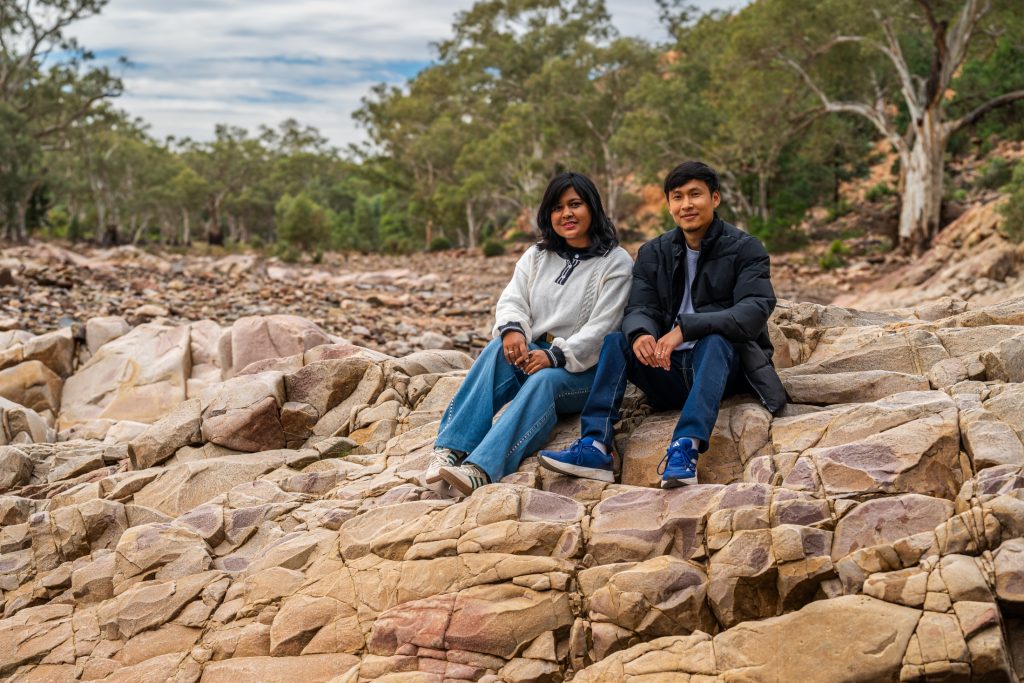
Scholars Nahid (left) and Aki Mittra (right) pictured at Ikara-Flinders Ranges National Park.
During their time on Adnyamathanha Country, John shared Yura Muda (creation stories), spoke in language, and highlighted plants that Adnyamathanha people used for medicine, ceremony and food. Activities included hiking to Akurra Adnya (Arkaroo Rock), one of the most culturally significant and sacred Adnyamathanha rock art sites; making fire; cooking damper; and looking for native animals, including Andu (yellow-footed rock-wallabies) and witchetty grubs—the English name of which derives from the Adnyamathanha word witjuri.
For Nahid, who is studying a Master of Environmental Science at the University of Western Australia, learning how Adnyamathanha traditional knowledge is integrated into the management of Ikara-Flinders Ranges National Park alongside modern conservation science made a strong impression. “Seeing how Indigenous ecological knowledge contributes to protecting biodiversity, including the recovery of the yellow-footed rock-wallaby, showed me the importance of combining different knowledge systems to build more sustainable futures,” she says.
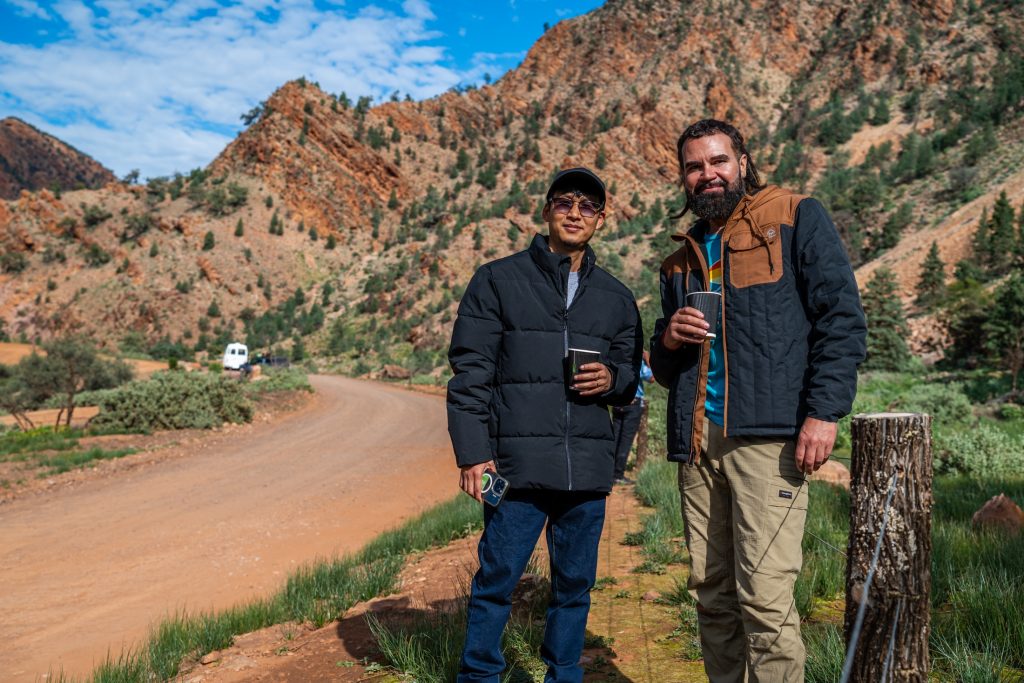
Aki Mittra pictured with John (right) during their tour at the Ikara-Flinders Ranges National Park.
“This experience will continue to influence how I think about sustainability, environmental management, and the relationship between people and nature in the future.”
For Aki Mittra, who is from one of Bangladesh’s indigenous groups, the experience created space for cultural exchange. “John also inspired me a lot by his deep knowledge of culture, history and Country, and the way he is working to protect Indigenous identity, culture and traditions. Throughout the tour, I learnt several things, such as sustainable environmental management that requires collaboration, respect for traditional knowledge and active community participation,” he says. “It was very meaningful because I could also compare these traditions with my own indigenous culture and traditions from Bangladesh. I found similarities in the connection with land, community and respect for nature.”
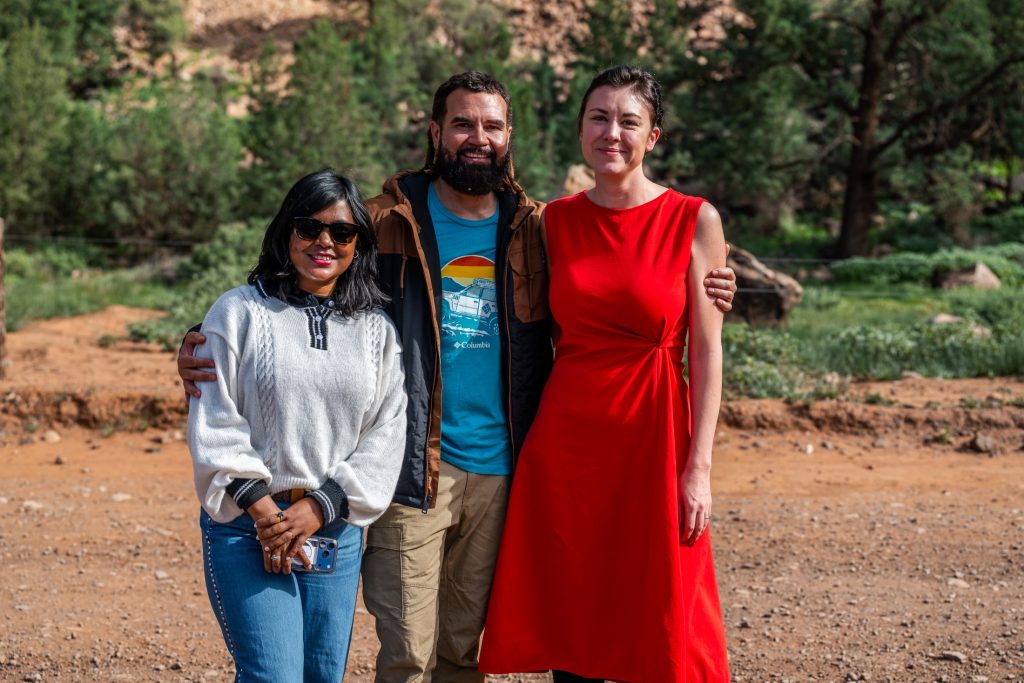
Nahid with John and Alice Tamang, Australia Awards – South Asia & Mongolia’s Indigenous Engagement Adviser.
In June, nine Bangladeshi Australia Awards scholars participated in two online weaving workshops led by Ronnie Jordan, a Pitta Pitta Wangkamahdla woman, weaver, painter and cultural facilitator based near Canberra. Each scholar received weaving materials in advance, enabling them to follow Ronnie’s demonstrations and take part in the practical activity from their own location.
During the workshops, Ronnie introduced scholars to weaving as a practice with deep cultural, practical and wellbeing significance. She explained how weaving is connected to Country, storytelling, community, identity and the passing of knowledge between generations.
Scholars learnt about natural fibres, including how materials are collected, dried, prepared and used in different ways depending on Country and season. Ronnie also explained how woven objects have traditionally been used to make everyday tools such as baskets, nets and fish traps, reflecting sustainable practices and knowledge of the environment.
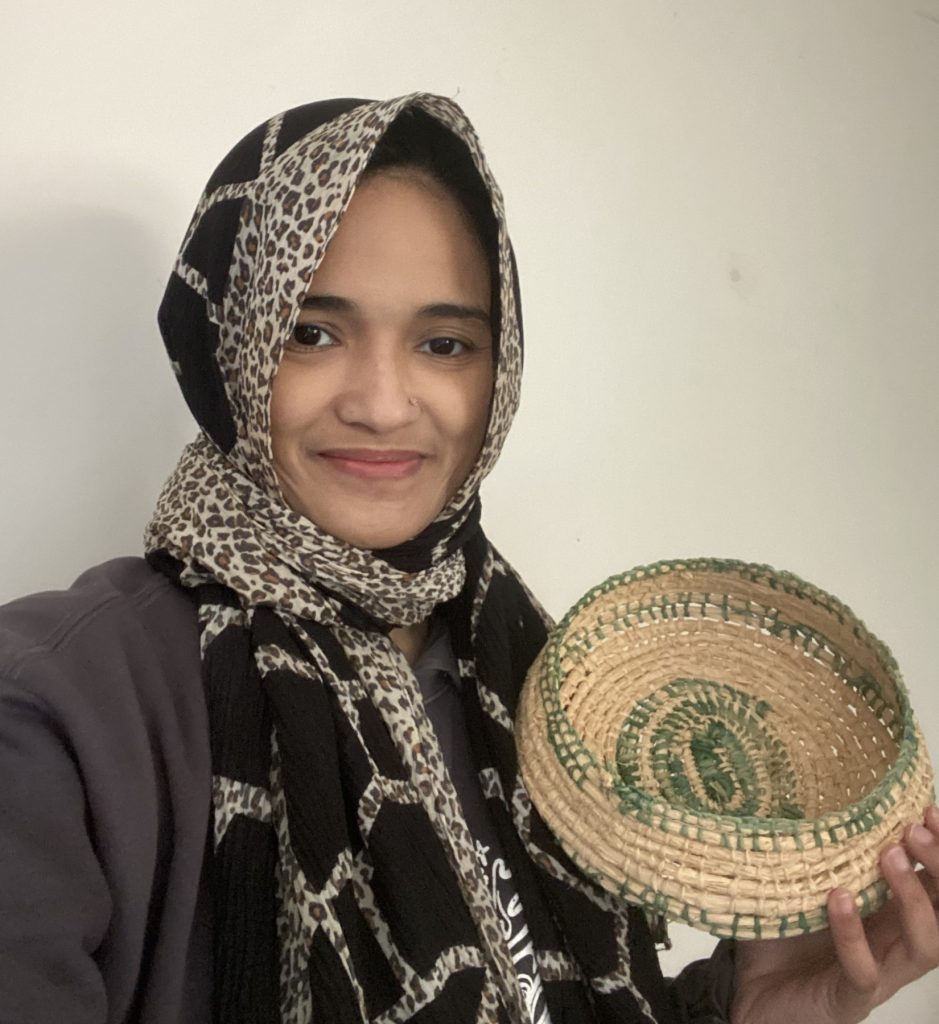
Scholar Julianna Shetara holds the woven basket she produced during the workshop.
Participants were guided through basic weaving techniques and encouraged to focus on the process rather than perfection. The workshops gave scholars a hands-on opportunity to learn about First Nations cultures, cultural protocols and connection to Country through a calm, creative and reflective activity.
For Bangladeshi scholar Juliana Shetara, the workshop was “a truly enriching experience”.
“Learning about Indigenous weaving traditions reminded me of the weaving practices in my home country, Bangladesh, where natural fibres are also used to create beautiful handmade items,” she says. “While the techniques and cultural meanings differ across traditions, I was struck by the shared values of craftsmanship, patience, and a deep connection to nature.”
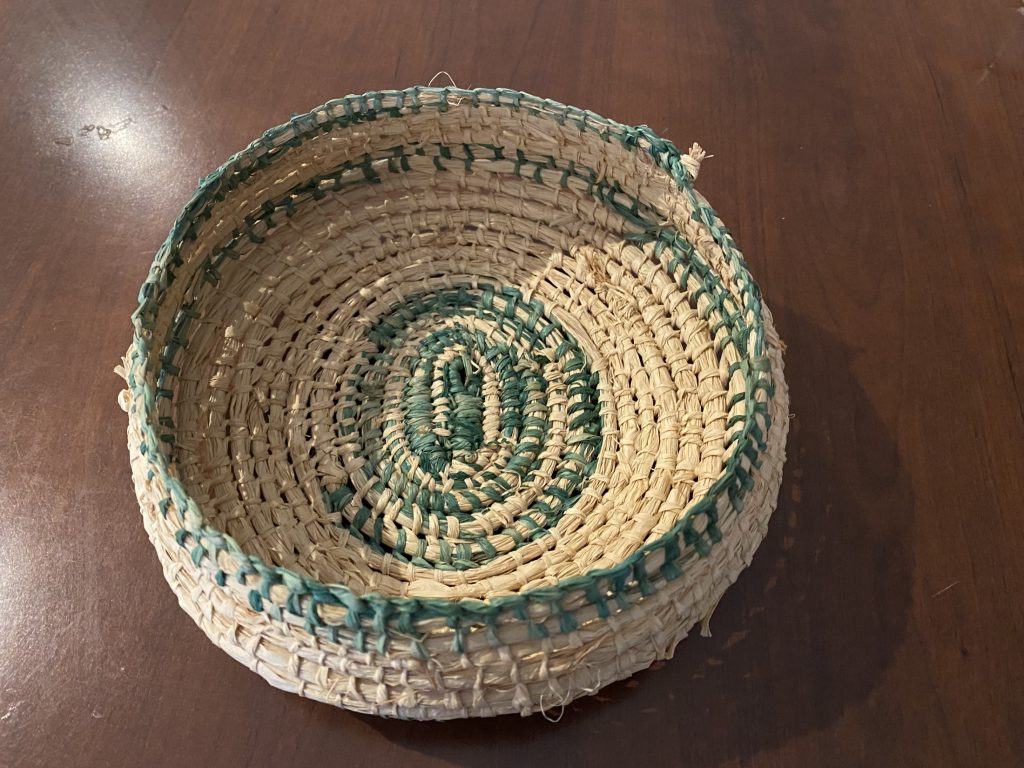
Juliana’s finished basked from the workshop.
Bangladeshi scholar Babu Marma was pleasantly surprised by his ability to create a woven item. “The online Indigenous weaving workshop was an eye-opening opportunity for me: I was astonished I could produce such an environmentally-friendly and useful product,” he says. “I truly appreciated this opportunity to learn more about Indigenous engagement and am really thankful to Ronnie for her guidance.”
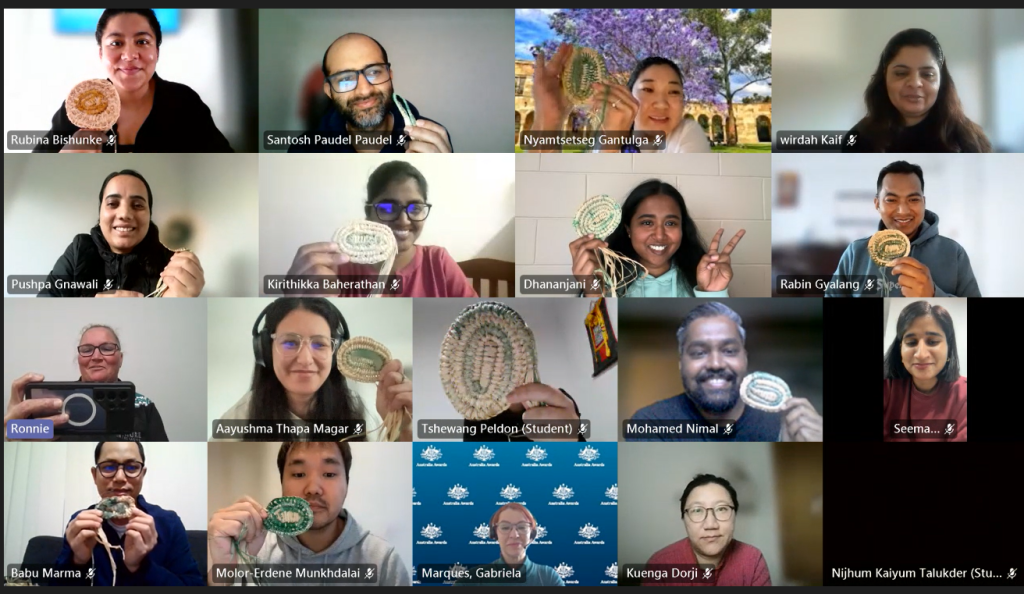
Participating scholars, including Babu Marma (bottom right-hand corner, during the workshop).
Also in June, Bangladeshi scholars in Melbourne participated in an Aboriginal Cultural Connection Workshop hosted by the North & West Melbourne Neighbourhood Centre in collaboration with Yarn Strong Sista. The two-hour session gave participants an opportunity to learn about Aboriginal culture through storytelling, conversation and creative activities in a welcoming community environment.
The scholars’ participation was coordinated by this year’s three Melbourne-based Scholar Ambassador, including Bangladeshi Md. Turab Hossain.
The workshop concluded with a hands-on ochre-inspired art activity guided by artist Annette Sax, a proud Taungurung woman from the Eastern Kulin Nation. Annette encouraged the scholars to be creative with natural materials while sharing their own cultural identity stories.
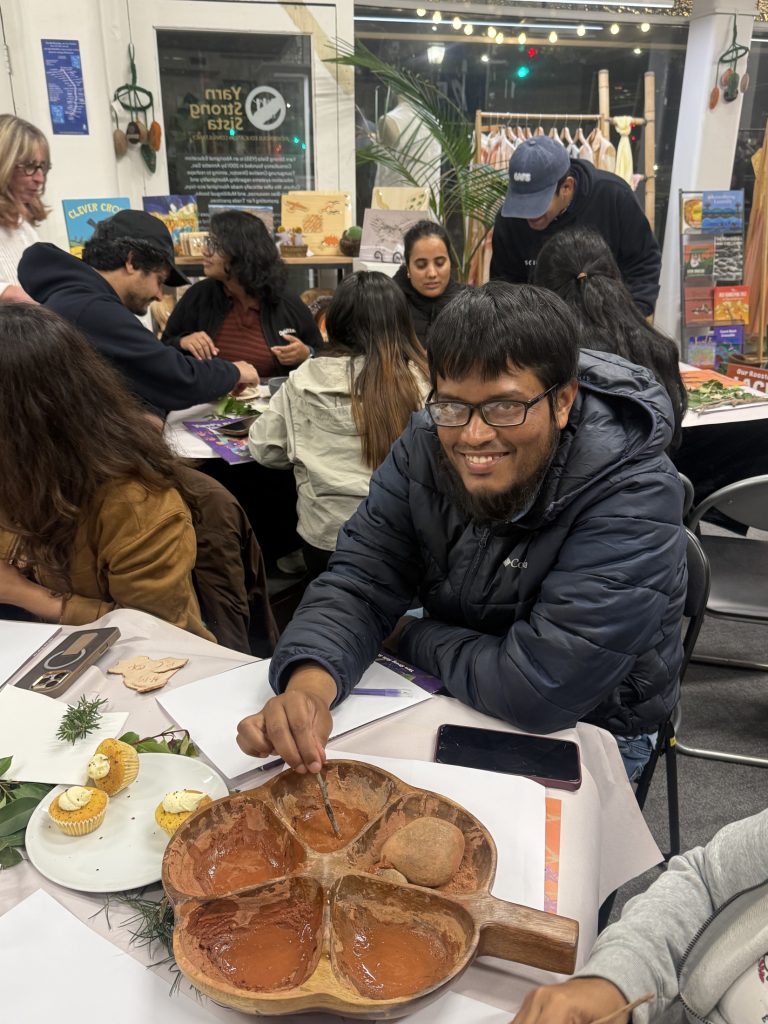
Turab participates in the art exercise under the guidance of Taungurung artist Annette Sax.
Collectively, these experiences gave the scholars practical and reflective ways to engage with First Nations Australians and learn about their cultures and knowledge systems. As NAIDOC Week approaches, their reflections highlight how cultural learning can deepen respect and create connections across countries and communities.