

From anxiety to assurance: A small change for those who depend on every drop
Posted: 30 July 2026
This year marks the 75th anniversary of Australian Government scholarships for students from the Asia-Pacific region, with the first scholarship recipients travelling to Australia under the Colombo Plan in 1951. To commemorate this significant milestone, Australia Awards – South Asia & Mongolia launched the Alumni Impact Storytelling Competition to celebrate the outstanding contributions alumni have made to the development of their countries.
The competition invited alumni to showcase the impact they have created and reflect on how their Australia Awards experience has helped shape their personal and professional journeys.
Dr Farah Anjum Sonia, an alumna from Bangladesh, was selected as the competition winner for her thoughtful account of how a simple intervention can improve healthcare experiences and strengthen essential services. Drawing on her work in transfusion medicine, she showed how her Australia Awards experience helped her look beyond clinical processes to the emotional needs of blood donors, whose continued participation is vital for patients with thalassemia, haemophilia and other lifelong blood disorders. Judges praised the story’s clarity, compassion and strong demonstration of impact, noting how the introduction of calming music during blood donation helped reduce anxiety, create a more reassuring environment and encourage donors to return.
Dr Farah Anjum Sonia completed a Master of Global Health, Health Leadership and Management at the University of New South Wales (UNSW Sydney) in 2024.
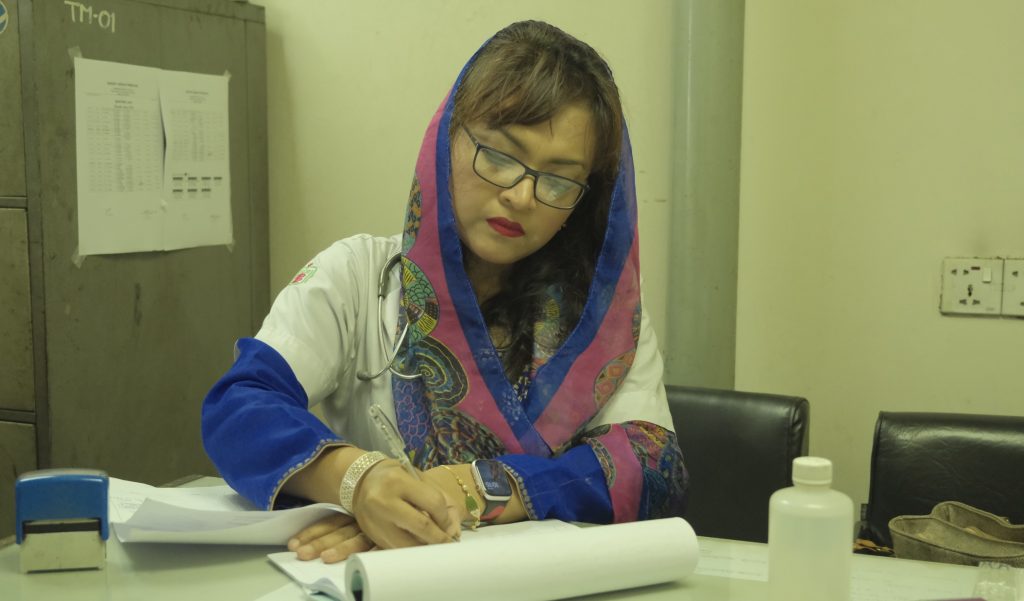
Farah pictured at her desk in the hospital.
In the quiet moments of a transfusion unit, I often see children with thalassemia sitting beside their parents, waiting for blood that will keep them alive for just a little longer. For patients with thalassemia, haemophilia and other haematological disorders, blood is not only an emergency need—it is a lifelong dependency. Behind every transfusion lies an unseen act of generosity: a donor who chooses to give blood.
As a physician working in Transfusion Medicine, I have had the privilege of witnessing both sides of this process: the patients who depend on blood, and the donors who make it possible.
Over time, I started noticing something else. Many blood donors, especially first-timers, arrived with visible anxiety: tense expressions, hesitant conversations and a clear fear of the unknown. Some completed the donation but left with relief rather than satisfaction, and few spoke about returning. In a system where patients depend on regular and reliable blood supply, this quiet reluctance from donors posed a significant challenge. I remember one young donor quietly asking, “Will it hurt?” while repeatedly glancing at the needle. He completed the donation, but what stayed with me was the sense of relief on his face when it was over, rather than any sense of satisfaction.
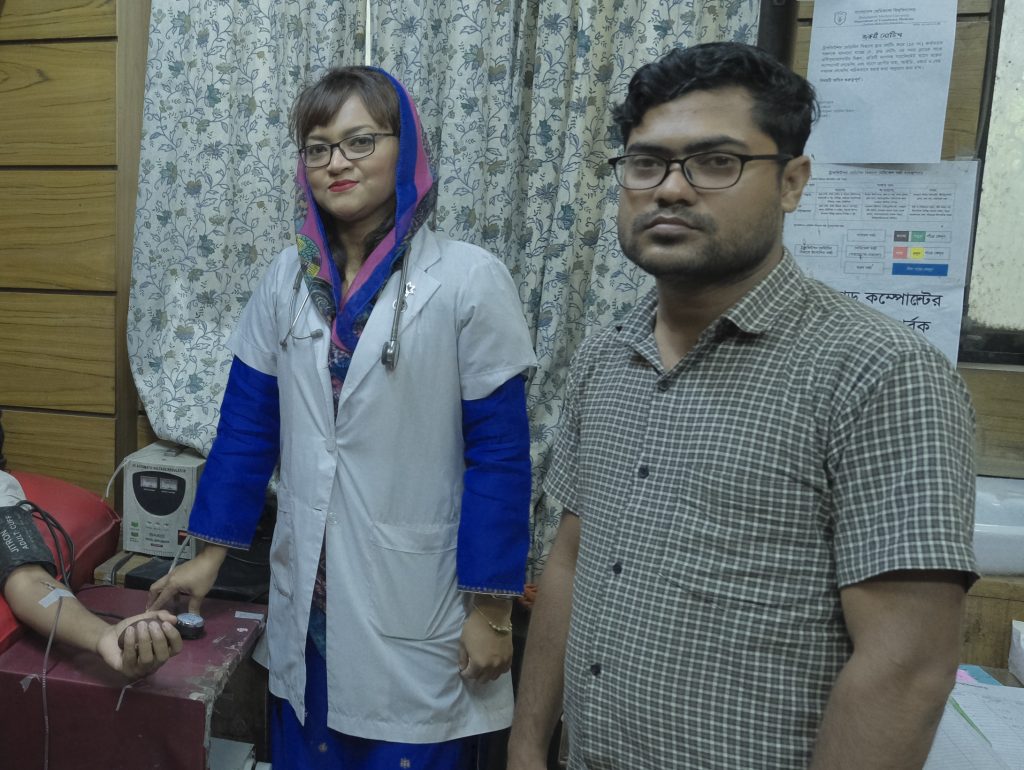
Farah (left) seen taking a blood sample of a patient with her colleague (right).
I realised that while we were focused on the safety and technical aspects of blood donation, we were overlooking something equally important: the emotional experience of the donor.
This realisation led me to introduce a simple, human-centred intervention: playing calming music during the blood donation process. It was a small change, requiring no advanced technology or additional cost, but it transformed the environment. The donation room felt softer, less clinical, more reassuring and more comfortable. The aim was not to alter the clinical procedure, but to improve the emotional environment, reduce donor anxiety and make the experience less stressful.
The change was subtle but meaningful. Blood donors appeared more relaxed, conversations flowed more easily and the process felt less intimidating. Some donors smiled after donation, and a few expressed their willingness to return in the future. What seemed like a minor intervention began to reshape the donation experience.
This small initiative was deeply influenced by my journey as an Australia Awards scholar at UNSW Sydney. My time in Australia did more than expand my academic knowledge; it changed how I think about healthcare. I was exposed to patient-centred approaches and evidence-informed practices that value not only clinical outcomes but also the experience of people involved. I learnt to see challenges not as fixed realities, but as opportunities for thoughtful, evidence-based solutions.
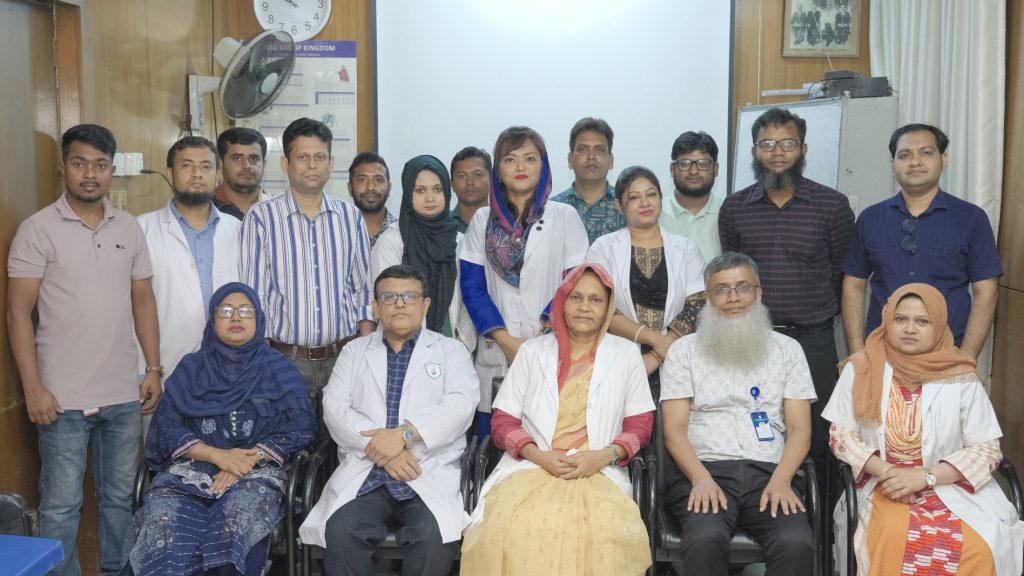
Farah (middle, standing) with other members of the medical unit team at the hospital.
Most importantly, the experience gave me the confidence to act.
Instead of accepting donor anxiety as something inevitable, I began to see it as a barrier that could be gently reduced, even in simple ways. Instead of waiting for large-scale changes, I understood that even small, context-appropriate interventions can still create a meaningful impact.
Today, when I see a donor sit more comfortably, I am reminded that impact does not always come from complex innovations. Sometimes, it begins with understanding people a little better. Because behind every relaxed donor, there is a patient whose life continues—quietly, steadily and with hope.
This experience has inspired me and strengthened my commitment to further explore simple, scalable and human-centred strategies to improve donor retention and strengthen voluntary blood donation systems in Bangladesh. For the patients who depend on regular transfusion, even the smallest change can make a difference, ensuring that those who depend on every drop of blood are never left waiting in uncertainty.