

Bangladeshi scholars inspired by strategies and panels at Scholars Symposiums
Posted: 16 December 2025
From October to December, 58 Bangladeshi Australia Awards scholars participated in six Scholars Symposiums across Australia. These events, which had the theme of From Learning to Leading: Make an Impact, were designed to help scholars develop the skills they need to be changemakers after completing their Scholarships.
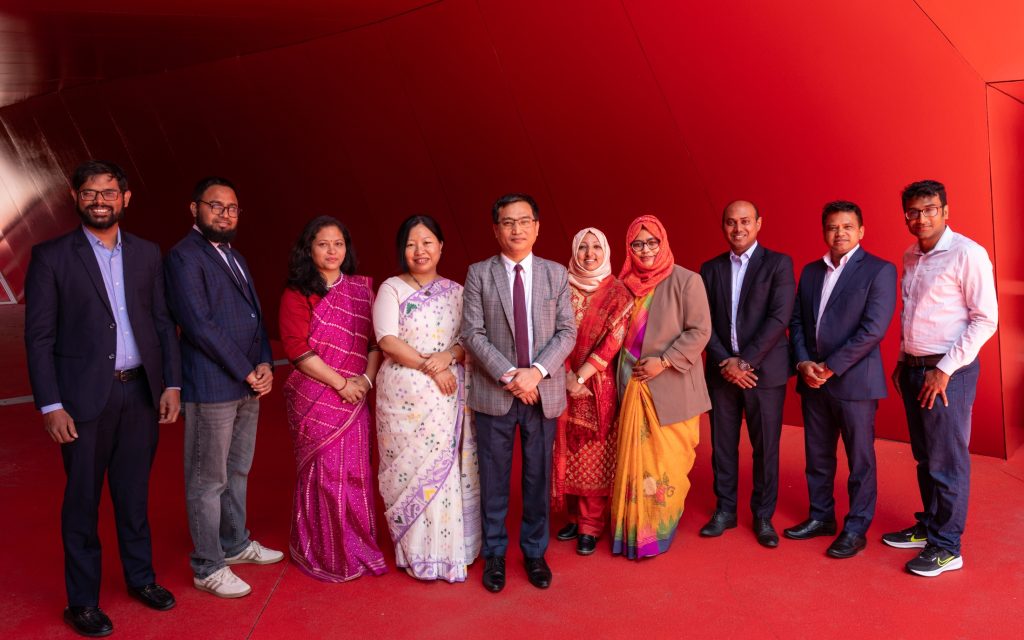
Bangladeshi scholars at the Canberra Symposium with representatives of the Bangladeshi High Commission (centre).
Each symposium began with an address from a representative of the Australian Department of Foreign Affairs and Trade (DFAT). Speaking at the Canberra Symposium, Lucienne Manton, the Assistant Secretary of DFAT’s Mainland South and Central Asia Branch, said, “The granting of an Australia Award marks a recognition of potential. We are pleased to support activities like this Symposium as one way to help you build on that potential and become changemakers for sustainable development—truly taking the step from learning to leading.”
Delivering opening remarks in Perth on behalf of the scholar cohort, Bangladeshi scholar Nahid Nawrin Sultana said, “Standing here today, I feel a profound sense of gratitude, pride and purpose. Gratitude, because this Scholarship is a life-changing opportunity. Pride, because every scholar in this room carries a story of resilience and ambition. Purpose, because we are all here with one mission: to learn to lead, and to make an impact.”
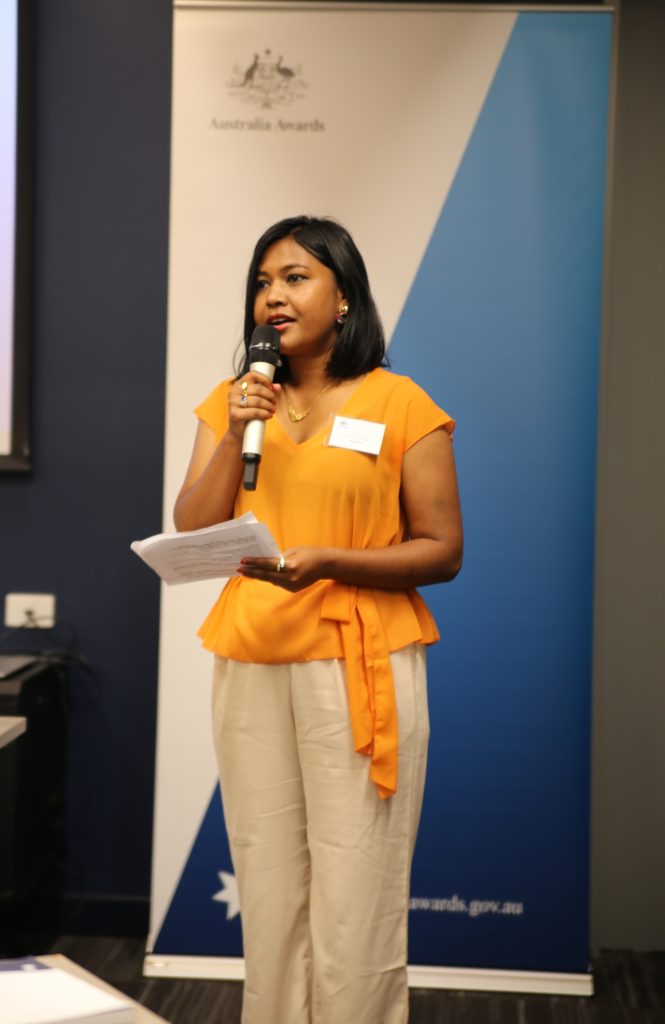
Nahid Nawrin Sultana delivers opening remarks on behalf of the scholar cohort in Perth.
A highlight of each symposium was a panel of expert speakers drawn from the Australian Government, the diplomatic or consular corps, and the development sector. Panel members spoke about a variety of subjects relating to leadership, including the importance of values for leaders, their tips for networking and advice on advocating for change. These speakers included:
- Sue Boyd, the first female Australian High Commissioner to Bangladesh, in Perth
- Senator Charlotte Walker, the youngest person elected to Australia’s Senate, in Adelaide
- Katie Smith, the Director of DFAT’s South Asia and Mongolia Section, in Canberra
- Afeeya Akhand, an Emerging Associate at the Australian National University’s National Security College and an Australian of Bangladeshi origin, in Canberra.
“The panel discussion was very insightful for me,” said Bangladeshi scholar Suravi Rani Sutradhar after participating in the Melbourne event. “My biggest takeaway was to stay genuine and keep advocating for my own ideas and values—even if it’s in a small way, it still matters.”
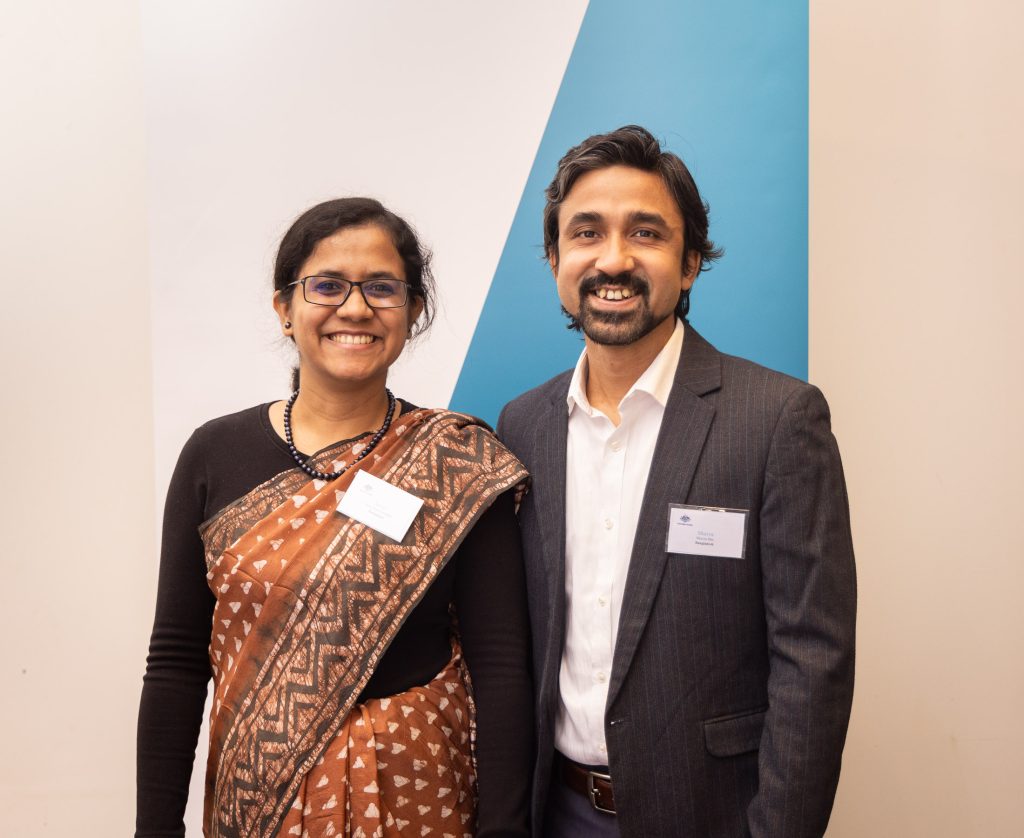
Bangaldeshi scholars Suravi Rani Sutradhar and Shuvra Das at the Melbourne Symposium.
The panels were facilitated by a scholar at each event, with Bangladeshi scholar Sokina Aktar moderating the session in Canberra. “I especially valued the opportunity to learn from panellists across different disciplines and perspectives,” Sokina said. “The discussions inspired me to think more critically and broadened my academic and professional outlook.”
The afternoon of the first day of each symposium was dedicated to leadership or communications training, designed to assist scholars to put into action what they had heard during the opening remarks and panel discussion in the morning.
Melbourne-based Bangladeshi scholar Mohoua Sobnam said, “I really enjoyed participating in the Leadership Session, as it helped me reflect on my personal leadership style and how to apply it in collaborative settings.”
The second day of the symposiums saw scholars consider their Development Impact and Linkages Plans (DILPs) and whether they needed to update them in light of their time in Australia and what they had learnt on the first day of the symposiums.
Scholars also had the opportunity to provide their peers with an overview of their DILP and outline how their studies and professional development activities in Australia would help them to implement their plans. The Bangladeshi scholars who shared their DILPs were:
- Supratic Chakma in Brisbane
- Hia Paul, Mohoua Sobnam, Afroza Sultana and Naim Ahamed in Melbourne
- Horidas Kumar in Sydney
- Shammi Akhter in Perth
- MD Ahsanul Kabir in Adelaide.
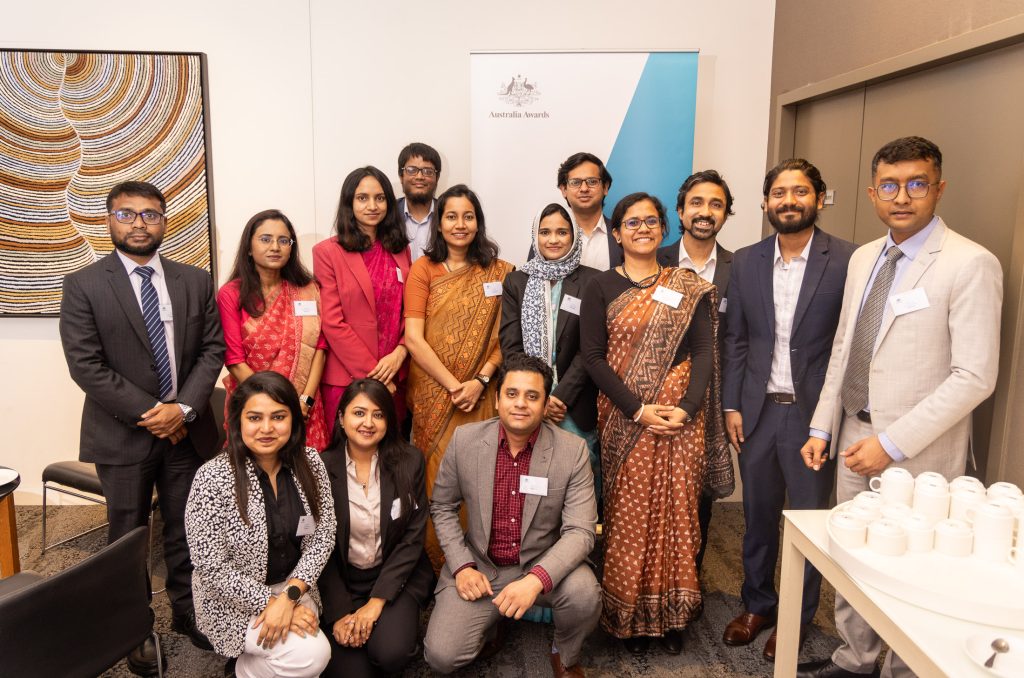
Bangladeshi scholars at the Scholars Symposium in Melbourne.
To finish the symposiums, scholars engaged in cultural activities with First Nations Australians. These activities included having an art lesson from Indigenous teachers in Brisbane, Melbourne, Sydney and Perth; viewing Indigenous art in galleries in Canberra and Adelaide; a walking tour in Adeaide; and learning to throw a boomerang in Brisbane . Reflecting on her experience in Melbourne, Bangladeshi scholar Juliana Shetara said, “I enjoyed learning new things and meeting new scholars; the painting part was the thing I loved most.”
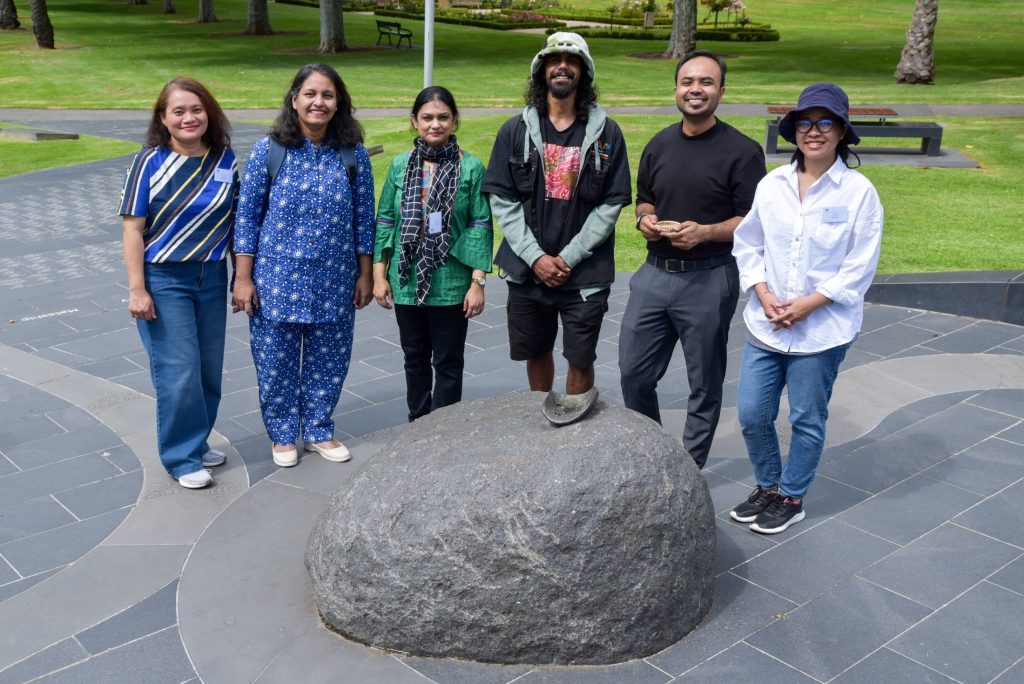
Bangladeshi participants in Adelaide with Indigenous guide Keneifa.
For many scholars, the most valuable aspect of the events was the opportunity to network with other scholars from across South Asia and Mongolia.
“I really appreciate attending the event, as this event brought me closer to the fellow future global leaders and significantly extended my network,” said Cairns-based Bangladeshi scholar Supratic Chakma. “I found it really fascinating to know the distinct sectors they are engaged on and the unique focuses of their work. I also feel enlightened by the thought-provoking discussion led by the distinguished panellists, which presented an array of experience, knowledge and guidance of leadership.”
Summing up the views of many participants, Bangladeshi scholar Nusrat Jahan said, “The Australia Awards Scholars Symposium in Perth was an inspiring experience that helped me reflect on my strengths and growth areas. I especially valued the practical strategies and real examples shared throughout the sessions. It has motivated me to apply these skills confidently in my professional journey.”