

Alumnus building community resilience and mobilising climate finance in Bangladesh
Posted: 9 November 2026
This year marks the 75th anniversary of Australian Government scholarships for students from the Asia-Pacific region, with the first scholarship recipients travelling to Australia under the Colombo Plan in 1951. To commemorate this significant milestone, Australia Awards – South Asia & Mongolia launched the Alumni Impact Storytelling Competition to celebrate the outstanding contributions alumni have made to the development of their countries.
The competition invited alumni to showcase the impact they have created and reflect on how their Australia Awards experience has helped shape their personal and professional journeys.
Bangladeshi alumnus Dr Kabir Hossain’s entry (below) placed in the ‘Commended’ category of the competition for its strong demonstration of how academic learning can be translated into practical climate action. Dr Hossain completed a Master of Climate Change in 2020 with the support of an Australia Awards Scholarship. His story highlighted his work applying climate and resilience knowledge gained through his Scholarship to address pressing challenges in vulnerable communities, from improving access to safe water and supporting climate-sensitive agriculture to helping resolve the long-standing Bhabadaho waterlogging crisis. Judges particularly valued the way the submission connected community-level resilience initiatives with efforts to mobilise climate finance for Bangladesh.
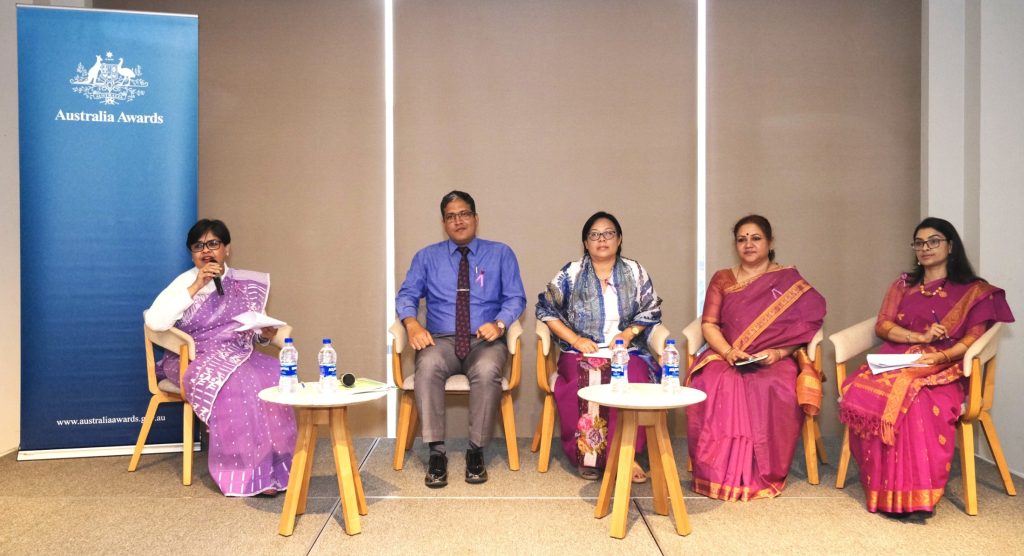
Dr Hossain speaks as a panellist at an International Women’s Day alumni discussion hosted by Australia Awards – Bangladesh.
Working closely with communities across climate-vulnerable regions of Bangladesh has shaped my understanding of how climate stress affects everyday lives and livelihoods. As a public servant, my work consistently involves communities exposed to acute and compounding climate risks, including river erosion, floods, waterlogging, salinity intrusion, heat stress and livelihood disruption. In this context, the Australia Awards Scholarship, which supported my completion of a master’s degree in Climate Change at the Australian National University (ANU), marked a pivotal stage in my professional journey and strengthened an evidence-based approach to climate action.
At ANU, academic learning in climate science, policy coherence and climate investment planning, combined with exposure to diverse regional perspectives, strengthened my ability to analyse climate challenges systematically and connect local experiences with national and global policy responses. Equally importantly, the Australia Awards experience enhanced my confidence to engage across institutions, communicate complex ideas clearly to stakeholders, and remain focused on implementation and results. The Australia Awards alumni network has since remained an important platform for peer learning and professional collaboration.
The most tangible application of this learning has been at the community level. While serving as Upazila Nirbahi Officer (UNO) in climate-vulnerable coastal and flood-prone areas, I applied analytical tools and research insights gained at ANU to strengthen service delivery and local resilience. This included improving access to safe drinking water, promoting climate-sensitive agriculture, facilitating housing for landless and homeless climate-affected households through Ashrayan-2 (the Government of Bangladesh’s public housing project), and institutionalising sustained tree plantation as a local development priority. These initiatives were guided by structured problem diagnosis, stakeholder coordination and results monitoring, and were recognised through an Integrity Award, a Best Performer Award among UNOs and a national award for tree plantation.
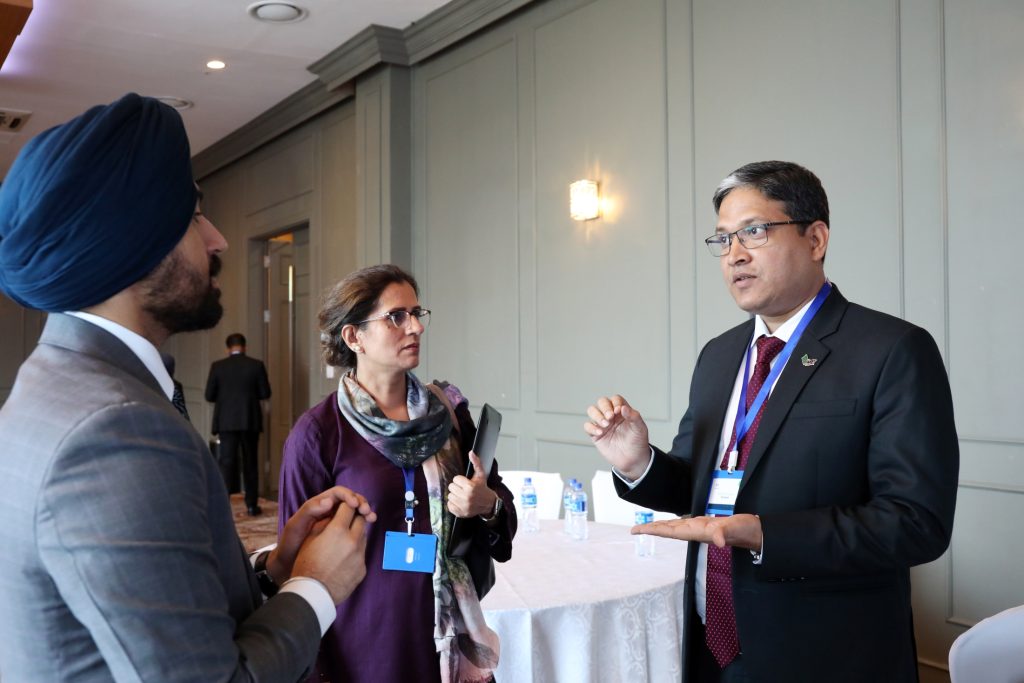
Dr Hossain (right) networking with fellow alumni at the 2023 Regional Alumni Workshop in Ulaanbaatar, Mongolia, themed ‘Building Back Better: Climate Resilience and Green Economic Recovery’.
One illustrative example of this applied approach was my contribution to addressing the decades-long Bhabadaho waterlogging crisis in Jashore District, which had constrained livelihoods for nearly one million people. While serving as UNO in Manirampur Upazila, I applied research-informed analysis to support locally grounded responses, with particular emphasis on rebuilding trust so farmers could act collectively. Coordinated drainage efforts ultimately cleared stagnant water, enabling the cultivation of a record Boro paddy crop for the first time in nearly three decades. This locally historic harvest demonstrated how applied learning can translate into large-scale, community-owned climate resilience.
At the national level, the analytical grounding provided by ANU has enabled me to engage more effectively with development partners. As a desk officer at the Economic Relations Division of the Ministry of Finance, I supported the interpretation of climate project proposals and communicated Bangladesh’s priorities in discussions with bilateral and multilateral partners, including the Green Climate Fund (GCF). Through my engagement in Bangladesh’s GCF Country Readiness Strategy (2024–2027) and interagency coordination processes, I contributed to efforts that supported the mobilisation of approximately USD500 million in climate finance to strengthen resilience and climate action.
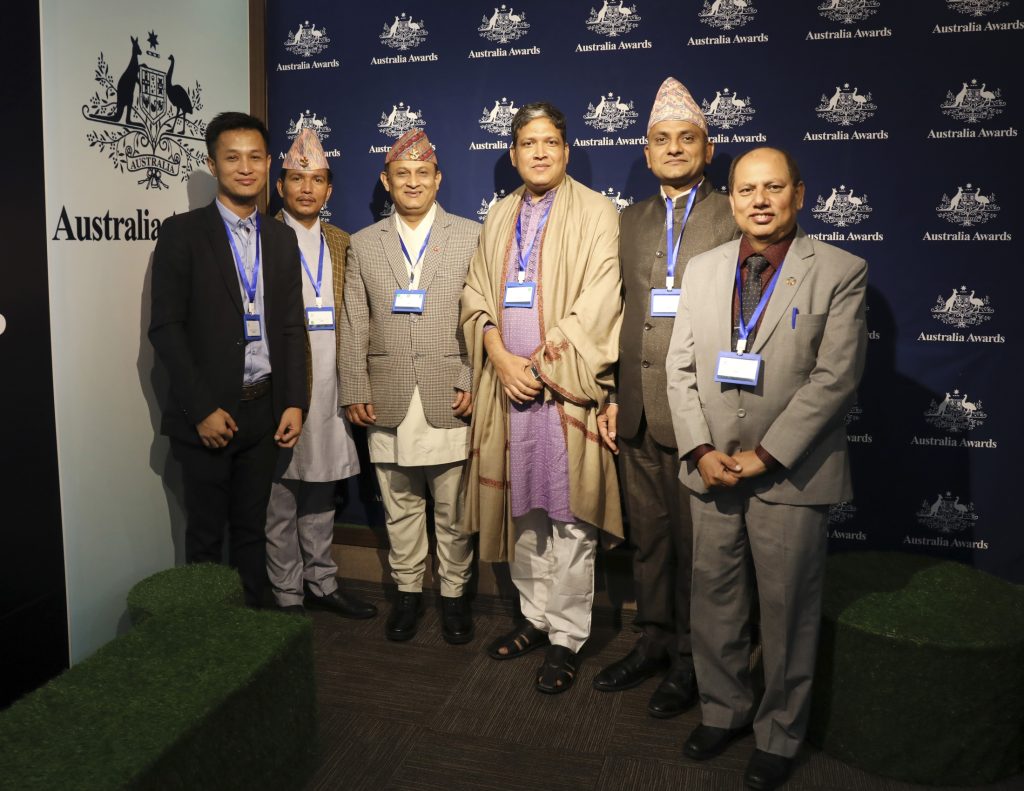
Dr Hossain (third from right) pictured with other alumni from Bangladesh and Nepal at the 2023 Regional Alumni Workshop in Ulaanbaatar, Mongolia.
Australia Awards has also strengthened my capacity to engage at ministerial and policy levels in setting strategic priorities, navigating negotiations and tailoring key messages to different stakeholders. These competencies reflect not only academic learning, but the leadership‑through‑implementation ethos fostered by the Australia Awards experience.
Currently, my role as a secondee in a leading multilateral development institution represents a strategic extension of this trajectory. It allows me to gain advanced exposure to global best practices in climate finance and project preparation, which I am committed to applying in support of Bangladesh’s development agenda.
Six years on, I view the Australia Awards experience not as a one‑time achievement, but as the foundation of a lifelong trajectory: continuously translating knowledge into measurable, scalable and sustainable outcomes for the communities and country I serve.