Alumnus advancing Indigenous rights and preserving cultural heritage in Bangladesh
Posted: 28 July 2026
For this year’s International Day of the World’s Indigenous Peoples, we recognise the remarkable work of alumnus Pallab Chakma, whose leadership and commitment to cultural diversity, inclusion and community development continue to make a positive impact in Bangladesh and across the region.
Pallab currently serves as Secretary General of the Asia Indigenous Peoples Pact (AIPP), a regional network representing Indigenous organisations across Asia. He also serves as General Secretary of the Kapaeeng Foundation Board, one of Bangladesh’s leading Indigenous rights organisations. Through these leadership roles, he advances Indigenous Peoples’ rights, cultural preservation and sustainable development at both national and regional levels. Prior to February 2026, he served as Executive Director of Kapaeeng Foundation, leading initiatives to strengthen and support Indigenous communities across Bangladesh.
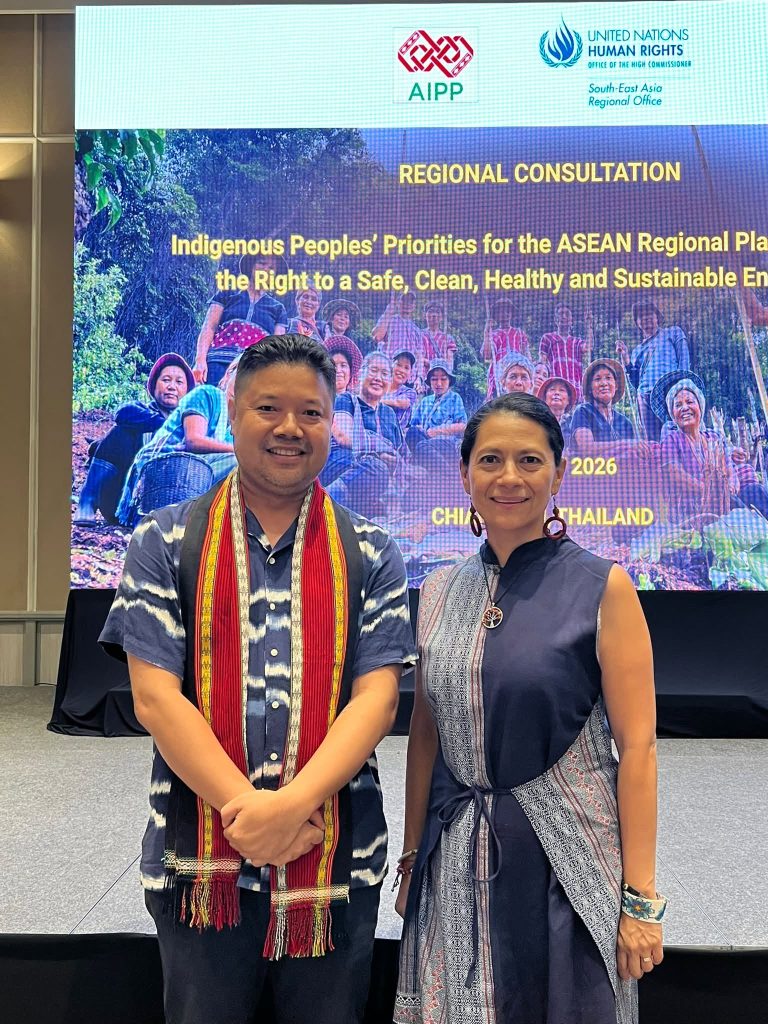
Pallab (left) with Astrid Puentes Riaño (right), United Nations Special Rapporteur on the Human Right to a Clean, Healthy and Sustainable Environment, in Chiang Mai, Thailand, on 27 May 2026.
In 2025, Pallab joined fellow Australia Awards alumni to deliver a diversity festival in Rangamati dedicated to preserving and promoting Bangladesh’s Indigenous cultures and languages, with the support of an Australia Awards Alumni Grant. Clinton Pobke, Deputy Head of Mission at the Australian High Commission in Bangladesh, attended the festival, demonstrating Australia’s continued support for Indigenous cultural preservation and intercultural understanding. Inspired by the values of diversity, inclusion and intercultural understanding he experienced during his time in Australia, Pallab and his team brought together Indigenous and non-Indigenous communities, cultural groups, local authorities, and development partners with this initiative to celebrate the rich cultural heritage of Bangladesh’s Indigenous Peoples.
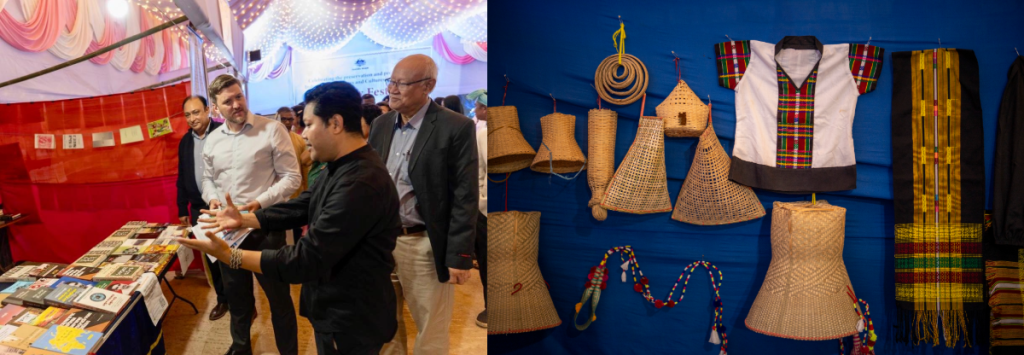
Pallab showcasing Indigenous language and cultural initiatives at the Australia Awards Alumni Grant–supported Diversity Festival in Rangamati, attended by Clinton Pobke (in white shirt, left image), Deputy Head of Mission at the Australian High Commission in Bangladesh.
The festival showcased Indigenous languages, traditions and cultural expressions through exhibitions, cultural performances and community engagement activities, creating opportunities for people from different backgrounds to learn from and appreciate one another. It also encouraged dialogue on multilingual education in the Chittagong Hill Tracts and highlighted the importance of preserving Indigenous languages and knowledge systems for future generations.
The project strengthened partnerships among cultural institutions, civil society organisations and local government bodies, while supporting efforts to document and preserve Indigenous languages and traditions. Through this initiative, Pallab and his fellow alumni demonstrated how community-led action can help preserve cultural heritage, promote inclusion and foster greater understanding across communities.
Growing up in the culturally rich Chittagong Hill Tracts, Pallab developed a deep appreciation for Indigenous languages, traditions and knowledge systems. This early connection inspired his lifelong commitment to promoting cultural diversity, preserving Indigenous heritage and supporting inclusive development.
A significant turning point in his journey came in 2012, when he received an Australia Awards Scholarship to pursue a Master of Mediation and Conflict Resolution at the University of South Australia. Living and studying in Australia’s multicultural environment strengthened his leadership, mediation and community engagement skills, which continue to shape his work today.
Reflecting on the impact of his Australia Awards experience, Pallab says, “My Australia Awards Scholarship was transformational. Studying mediation and conflict resolution at the University of South Australia deepened my understanding of diversity, inclusion and peaceful dialogue. The experience equipped me with the knowledge, skills and networks that continue to guide my work in promoting cultural diversity, supporting Indigenous communities and building partnerships for positive change in Bangladesh and beyond.”
Today, Pallab’s leadership extends to the regional and international stage. As Secretary General of AIPP, he contributes to dialogue and cooperation on issues affecting Indigenous communities across Asia and works to ensure Indigenous voices are represented in regional discussions and important decision-making processes.
In 2026, Pallab participated in regional consultations on Indigenous Peoples’ priorities for environmental sustainability and climate resilience. He also represented the Asia Indigenous Peoples Caucus at the 25th session of the United Nations Permanent Forum on Indigenous Issues, advocating for stronger inclusion of Indigenous Peoples in development, peacebuilding and decision-making processes.
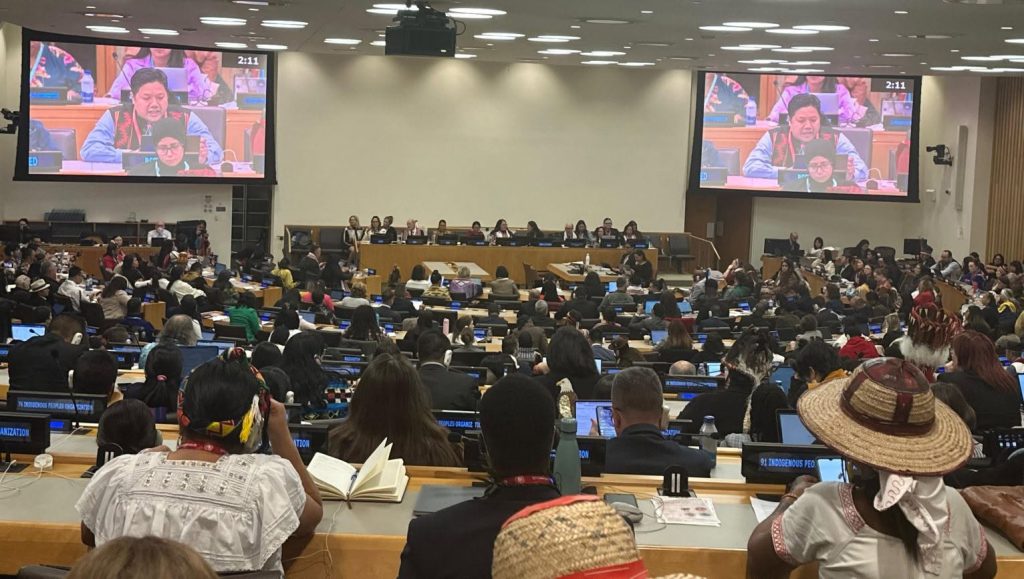
Pallab presenting a joint statement on behalf of the Asia Indigenous Peoples Caucus at the 25th Session of the United Nations Permanent Forum on Indigenous Issues, advocating for Indigenous Peoples’ rights to health, peace, and inclusion.
His leadership has also been recognised at the regional level. In 2024, AIPP recognised Kapaeeng Foundation as one of the pioneering Centers of Defenders in recognition of its commitment to supporting defenders of Indigenous Peoples’ human rights in Bangladesh. Pallab received the award on behalf of the organisation, reflecting the collective efforts of Kapaeeng Foundation and its partners to strengthen and support Indigenous communities.
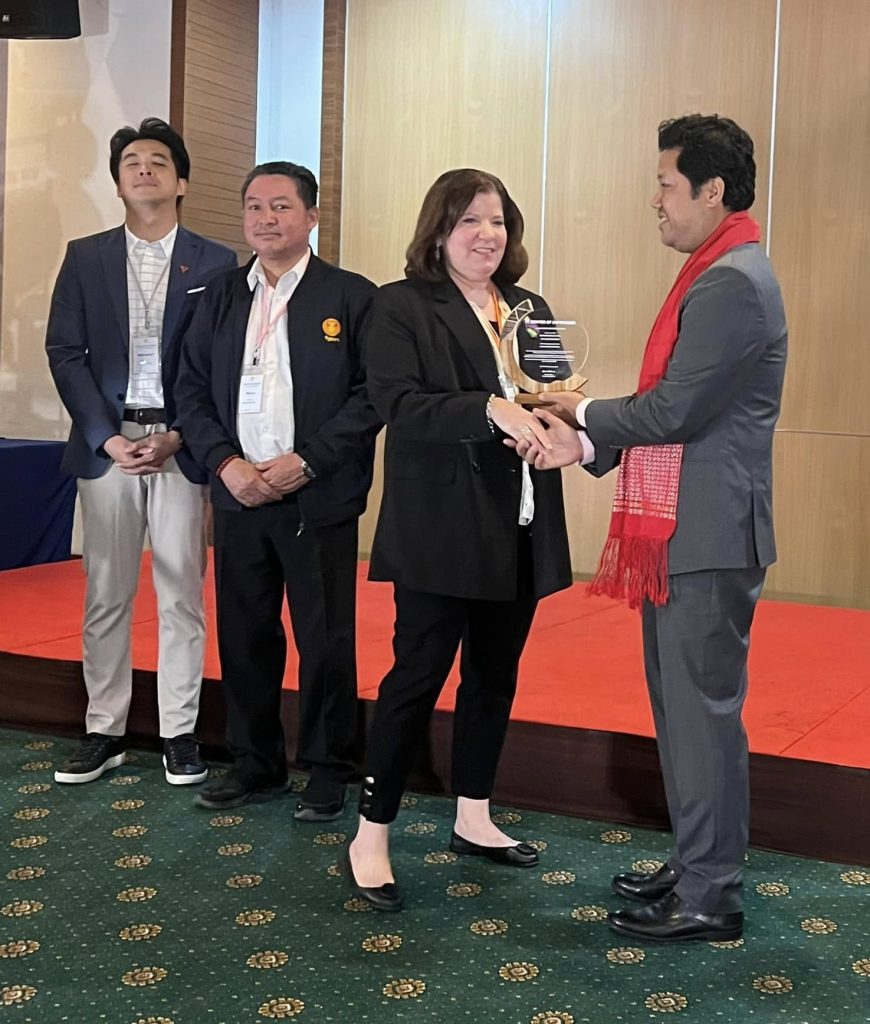
Pallab (right) receiving the “Centers of Defenders” Award on behalf of Kapaeeng Foundation from Dr. Sheryl Lightfoot, Chairperson of the UN Expert Mechanism on the Rights of Indigenous Peoples, at the AIPP Awards Ceremony in Chiang Mai, Thailand in 2024, in recognition of the organisation’s commitment to advancing Indigenous Peoples’ rights in Bangladesh.
“International Day of the World’s Indigenous Peoples is an opportunity to celebrate the rich languages, cultures and knowledge systems that Indigenous communities contribute to our societies,” Pallab says, reflecting on the significance of the occasion. “It is also a reminder of our shared responsibility to preserve this heritage for future generations. I remain committed to working with communities, governments and development partners to ensure Indigenous cultures, languages and traditions continue to thrive and enrich our collective future.”